Mt Shasta is known
to many as the Mt
Everest of California.
It dominates the
skyline in the
Northern California
region, rising 10,000
vertical feet above
it's base to a height
of 14,179 feet. It can
be seen from over a
hundred miles away.
Shasta is the second highest of all the Cascade volcanoes, just behind Mt Rainier. Even though many people come to Mt Shasta for
skiing and other outdoor activities, mountain climbing is recognized as the main recreational attraction of Shasta. Over 15,000
people each year put their skills to the test in an attempt to reach it's lofty 14,179 foot summit, but only a third of this number
actually reach their goal according to statistics. Mount Shasta also holds the honor of being one of California's 15 fourteen thousand
footers. So it holds an interest to those working to complete the goal of climbing all 15 of those peaks as well. Shasta hosts seven named glaciers including the Whitney
Glacier, which is a two mile long river of ice
and is the largest glacier in the US state of
California.
Climbing Mt. Shasta is a memorable and
challenging experience. During the mid-19th
Century the climbing excitement was magnified
by the fact that it took a considerable amount
of effort just to reach the mountain.
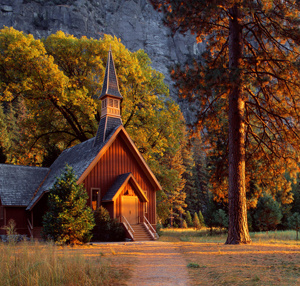 The first recorded ascent of Mount Shasta was
by Captain E.D. Pearce, a Yreka sawmill
foreman, in 1854. Then a few years later,
Clarence King climbed the peak. There were
five in his party and they ascended the
Shastina peak, (photo to the right) camping
overnight on the rim of the crater. The next
morning, after a light breakfast, they hiked
the connecting saddle to Mt. Shasta's peak. King wrote in his journal: "A singularly transparent air revealed every plain and
peak until the earth's curve rolled them underremote horizons. The whole great disk of world beneath wore an aspect of
glorious cheerfulness. It seemed incredible that we could see so far toward the Columbia River, almost across the state of
Oregon - but there stood the Pit, Jefferson and the Three Sisters in unmistakable plainness."
The first recorded ascent of Mount Shasta was
by Captain E.D. Pearce, a Yreka sawmill
foreman, in 1854. Then a few years later,
Clarence King climbed the peak. There were
five in his party and they ascended the
Shastina peak, (photo to the right) camping
overnight on the rim of the crater. The next
morning, after a light breakfast, they hiked
the connecting saddle to Mt. Shasta's peak. King wrote in his journal: "A singularly transparent air revealed every plain and
peak until the earth's curve rolled them underremote horizons. The whole great disk of world beneath wore an aspect of
glorious cheerfulness. It seemed incredible that we could see so far toward the Columbia River, almost across the state of
Oregon - but there stood the Pit, Jefferson and the Three Sisters in unmistakable plainness."
Clarence King was so impressed with Mt. Shasta that he stayed on the summit all day viewing the vast scenes that spread out like
a carpet below him. Before leaving the summit the party waved the American flag for a moment and then went down to the hot
springs just below the peak and prepared camp for the night. They used lava boulders to shield themselves from the biting cold
wind that howled relentlessly all night long. After a glorious sunrise, they shouldered their packs and hurried down the mountain to
Sisson's inn for a hot meal and a comfortable bed. In his exploits King is credited with discovering Shasta's glaciers, and the
hidden frozen lake inside Shastina crater is named after him.
Modern day hikers/climbers do not have it
nearly so difficult as the early explorers of
centuries gone by. Approaches to many of
the routes are made easy by way of paved
highways. But the spirit of adventure is still
high and most trails eventually peter out, and
cross country navigation and travel become a
must.
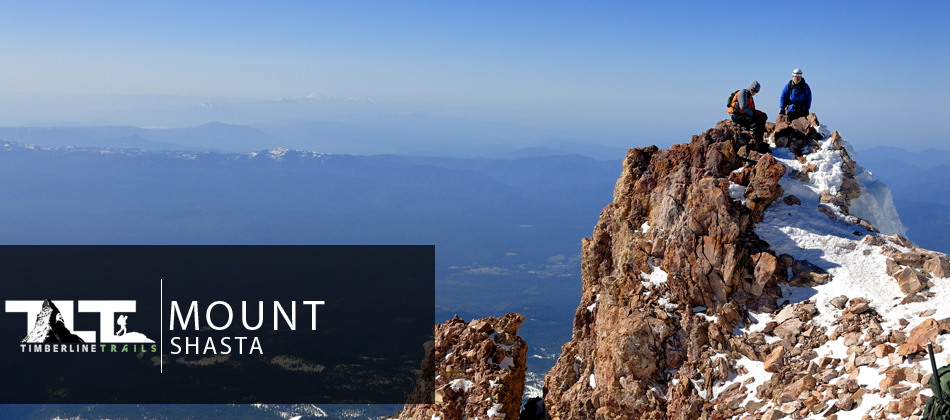
In the photo to the left you see the beautiful
early morning lighting on the red cliffs, as
climbers make their way up the steep snow
and ice above Red Banks. They are nearly
to the base of Misery Hill which is well
named, because at this point of the climb it
seems that getting to the summit has become
just as much of a mental battle as a physical
one.
Climbing information and equipment can be obtained from
The Fifth Season (image to the left), a local outfitter,
located at 300 North Mt Shasta Blvd., Mount Shasta, CA
96067. Their phone number is 530-926-3606. They also
provide rentals. The Fifth Season also has a 24 hour
weather and climbing condition hot line at 530-926-5555.
Unless you are late in the summer months, or in a very
low snowfall year, crampons and ice axe are a must on Mt
Shasta. I remember years ago, while climbing on the
mountain with my father, watching a guy attempt to
proceed up Avalanche Gulch without either. After slipping
and falling several times, he gave up and went down.
Good thing, for if he had been able to go much higher he
possible would have really hurt or even kill himself.
While on your adventure to explore and possibly climb Mt
Shasta, don't forget to spend a little time checking out the
quaint little town of Mt Shasta City (photo to right).
Mount Shasta is a city in Siskiyou County, California
located at around 3,600 feet on the lower flanks of Shasta
itself. It is a prominent northern California landmark. The
city is only 9 miles southwest of the summit of Shasta. As
of the 2000 Census the city had a total population of 3,624
with approximately 3,000 additional residents living
immediately outside the city limits.
Coming from a large metropolitan area like Los Angeles, I
love to spend a little time in these small towns. It seems to
slow life down a bit, and those of us who hurry around
most of our lives fighting crowds and congestion can
appreciate a place like Mt Shasta City.
In the photos on the left, you see the large
temperature gauge located in the heart of Mt Shasta
City on one of the main streets, and one of the
mountain climbing forest rangers who just happened
to hit the summit at about the same time we did. As
you can see, the temperature in the city was 50
degrees F, at about 8:30AM, while the very next day
on the summit (at about 9AM), the temperature was
about 36 degrees.
But weather can change fast in the mountains, and Mt
Shasta is known for making it's own weather. So you
need to be prepared for harsh conditions should things
not go your way. We always carry several layers of
clothing, including wind and rain protection. Good
gloves and a good insulated hat are also necessary.
The mountain has no mercy for the unprepared, and
cold injuries are common on Mt Shasta.
Normally in the summer months you have an above
ground running spring coming out of a pipe. Some say it is
the cleanest, freshest water in all of California. This little
spring is located at Horse Camp, and it is run by the Sierra
Club. Our climb on May 17th, 2009 found the little spring
buried down about 5 feet under the snow. The camp caretaker had placed wands around the
hole so people would not fall in, and created some snow
steps to give access to the water below so you could fill
up your water bottles if need be.
In the late summer months, this little spring is the last
source of reliable water before pushing on. But Mt Shasta
is never completely void of snow, so carrying a pot, fuel,
and stove will enable you to get water further up.
All in all, Mt Shasta has much to offer when
it comes to hiking, climbing, skiing, and
other outdoor activities. But you need to
take the mountain serious and come
prepared.
On the right, you see my son Ben making his
way up the final slopes of Mt Shasta just
before gaining the summit. I have to say that
it is a great feeling to be on top of this giant
volcano, and the views from atop are
nothing short of spectacular. Well worth the
effort.
So please make use of the below links for
more adventure on Mt Shasta. They contain
information on climbing up Shasta's most
popular route, Avalanche Gulch.
To provide a pathway into the vastness of God's wonderful creation where you can escape from the routine of everyday life and journey in a
world of amazing beauty and adventure. It is our hope that you will be both renewed and inspired by your experience, as we invite you to
tread on the very threshold of life...life at Timberline.
Read More
Curabitur scelerisque mauris quis diam gravida eu placerat ligula scelerisque. In vitae sem nec massa imperdiet condimentum. Donec ut mauris vel risus rutrum commodo. Duis sed massa id urna varius. Fusce nibh sapien, porttitor sed euismod in, aliquet eget lorem.
- Donec ut mauris vel risus rutrum commodo.
- Fusce nibh sapien, porttitor sed euismod inaliquet eget lorem.
- Curabitur scelerisque mauris quis diam gravida
- Placerat ligula scelerisque.
- In vitae sem nec massa imperdiet condimentum.
Curabitur scelerisque mauris quis diam gravida eu placerat ligula scelerisque. In vitae sem nec massa imperdiet condimentum. Donec ut mauris vel risus rutrum commodo. Duis sed massa id urna varius. Fusce nibh sapien, porttitor sed euismod in, aliquet eget lorem. Curabitur scelerisque mauris quis diam gravida eu placerat ligula scelerisque.